
Tired of running out of hot water? A tankless system heats water on demand — so you get endless hot water, lower energy bills, and a unit that lasts nearly twice as long. We handle the full installation from start to finish. A tankless water heater installation is more involved than a tank swap because the gas and the flue usually change. We size the unit to your peak hot water demand rather than to the square footage of the house.
Call or Text (980) 319-1201Tell Us What You Need
Thank You!
We'll get back to you shortly. For immediate help, call (980) 319-1201.
More and more homeowners across Charlotte are making the move from traditional tank water heaters to tankless systems. At Daniel's Water Heater Repair, we've seen this trend pick up especially in newer neighborhoods like Ballantyne, Lake Norman, and Huntersville. Here's why:
This is one of the most common questions we get. Here's a straightforward comparison:
If you're not sure which direction to go, we'll look at your home, talk through your hot water usage, and give you an honest recommendation. Sometimes a tank is the better call. Sometimes tankless makes more sense. We'll tell you straight. If you're leaning toward sticking with a tank, check out our water heater installation page.
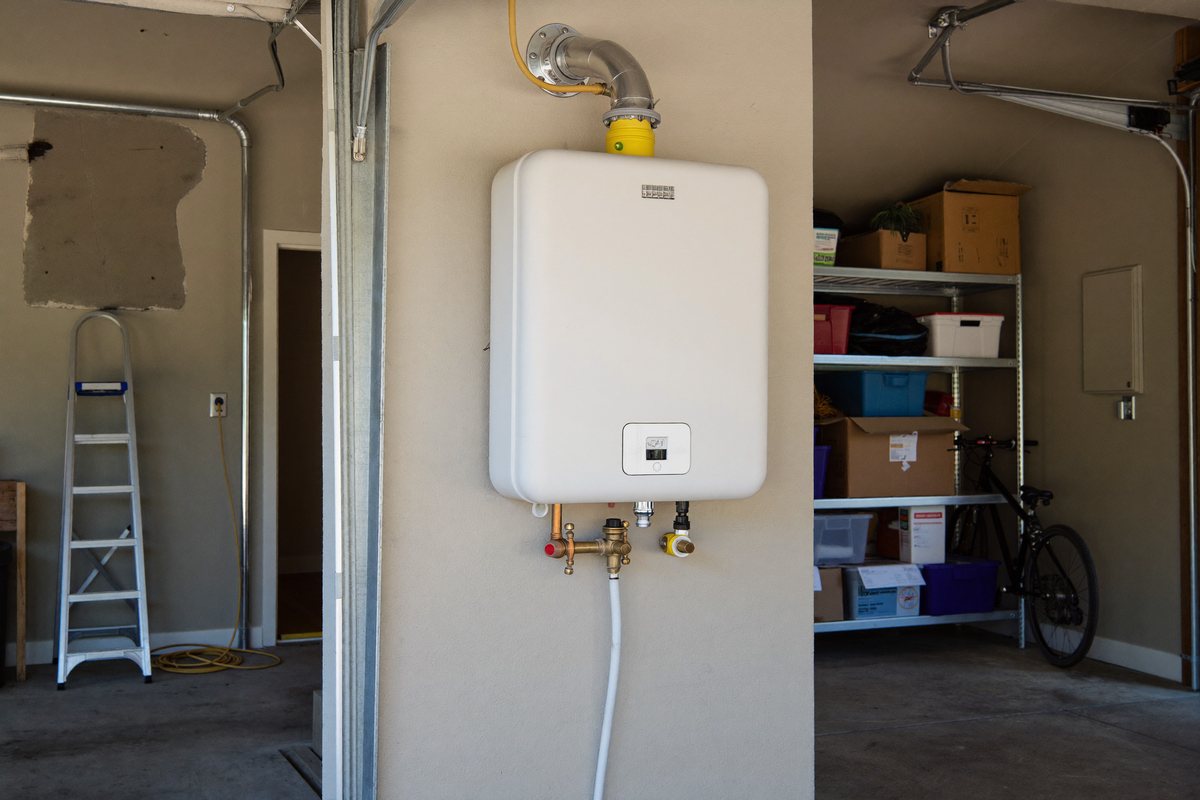
Switching to tankless is a bigger job than swapping a regular tank. There's often gas line, venting, or electrical work involved. Here's how we handle it:
We'll look at your current setup — gas or electric, where the unit will go, and whether any upgrades are needed. Some older Charlotte homes need modifications to support a tankless system, and we'll tell you that upfront. Older homes often need a bigger gas line and a dedicated electrical circuit. Local codes set the flue clearances here, and the plumbing has to hold pressure once the tankless water heater is in. We check the gas supply and the water supply before quoting. A tankless water heater that starves for gas will never hit its rated output.
Not all tankless systems are the same. We'll recommend the right size and type based on your household's hot water needs, not just what's on the shelf. We work with brands like Rinnai, Navien, Rheem, and others. Tankless water heaters are rated by flow rather than gallons. Getting that number wrong is the main reason people end up disappointed with tankless water heaters. We ask how many bathrooms run at once and size from there. Water temperature coming into the house matters too, because a colder inlet cuts the flow a tankless water heater can deliver.
Unit, labor, any modifications — all included in one upfront number. No surprises at the end. That covers the unit, the plumbing, the gas work and the venting on your tankless water heater. Nothing about the tankless water heater installation gets billed later. The unit, the gas line and the water connections are all in the one figure. Tankless water heaters priced any other way tend to grow after the fact.
We remove the old tank (if applicable), run any new gas or electrical lines needed, mount and connect the tankless unit, and make sure everything meets current code. New gas lines get pressure tested before the tankless water heater goes on the wall. Water supply lines are flushed first so debris never reaches the heat exchanger. The condensate line and the isolation valves go on at the same time. Those two make future tankless water heater service far easier. Skipping them saves an hour now and costs a day later.
We make sure you've got strong, consistent hot water at every faucet. We'll also show you the basics of your new system so you know how it works. You should see hot water at every tap within seconds. We walk through the annual flush too, because that is what keeps a tankless water heater at its rated efficiency. Ten minutes a year on the plumbing side keeps the unit working like new. A scaled tankless water heater loses output long before it fails outright.
Most homes can — but it's not always a plug-and-play situation. Here's what we look at during the assessment:
We figure all of this out during the initial assessment and include any needed modifications in the quote. No surprises after the fact. Most of the cost sits in the plumbing and the gas work rather than in the tankless water heater itself. A house already set up for tankless water heaters costs a lot less to convert. If the gas line and the flue are right, the water heater itself is the easy part.
Here are the general ranges we see for tankless installations in the Charlotte area:
| Installation Type | Typical Cost |
|---|---|
| Gas tankless installed (standard) | $3,000 – $5,000 |
| Electric tankless installed | $2,500 – $4,000 |
| Tank-to-tankless conversion | $3,500 – $5,500 |
| Old unit removal & haul-away | Included |
The range depends on the brand, the unit, and how much work your home needs to support the new system. We always give you the full price upfront before starting. Tankless water heaters cost more than a tank on day one. The saving comes from heating water only when you draw it. A tank keeps 50 gallons of water hot all night whether you use it or not. Tankless water heaters simply do not do that. That standby loss is most of the gap in running cost between the two. Tankless water heaters only draw gas while the tap is open.
For many Charlotte homeowners, yes. You get endless hot water, lower energy bills, and a unit that lasts nearly twice as long. The upfront cost is higher but it pays for itself over time. Endless supply is the part people notice first. The efficiency gain turns up quietly on the bill every month after that. Most homes see the difference inside the first full winter. Demand is highest then, so the saving shows up fastest.
Most tankless installations in the Charlotte area run between $2,500 and $5,500 depending on the unit and what modifications your home needs. We give you the full price upfront before any work starts. A local tankless water heater installation quote should always include the gas and electrical work. Ours does, and the plumbing is in there too. A quote that leaves the gas line out is not a real tankless water heater installation quote. Ask any installer what size gas line the unit needs before you sign. That one answer separates a real tankless water heater quote from a guess.
Most homes can, but some older Charlotte homes may need upgrades to the gas line, electrical panel, or venting. We assess all of that before giving you a quote so you know exactly what's involved. The gas line is the usual sticking point. A tankless water heater draws far more gas at peak than a tank ever does, so the supply pipe often has to grow. Local gas pressure varies across Charlotte, so we measure rather than assume. Water pipes get checked on the same visit. Water pressure at the meter gets checked too, since low pressure caps what any tankless unit can deliver.
Typically 4–8 hours depending on whether your home needs any modifications. A straightforward swap where everything is already in place is on the shorter end. Running new plumbing or a gas line adds most of that time. Safety checks and the pressure test come at the end either way. We do not leave until the water runs hot and steady at the furthest tap. That is the only test that tells you the tankless water heater is sized right. Sizing matters more than install time: a unit rated for 7 gallons a minute in summer may only give 4 in February, so we size from the winter number.
Most tankless units last 15–20 years with proper maintenance. That's nearly double the lifespan of a traditional tank water heater. Tankless water heaters also give you back the floor space a tank takes up. That matters in a closet or a small utility room. Most tankless water heaters mount on a wall and take up about the space of a carry-on. Undersized tankless water heaters are the most common complaint we hear, so we would rather fit one size up than have you cold in January.
Yes. They should be flushed about once a year to keep them running well. Charlotte's water is relatively soft which helps, but annual maintenance still makes a difference in performance and lifespan. A yearly flush protects the heat exchanger. Most local plumbing outfits will handle it, and we fold it into our maintenance visits. Soft water here means tankless water heaters scale slower than they would further west. You still want the yearly flush on the calendar. Descaling takes under an hour and needs no parts. Doing it keeps the tankless water heater at full output. A scaled water heater loses output long before it fails.