
A lot of Charlotte homeowners don't know they need one — until a home inspector flags it or their water heater starts leaking. An expansion tank is a small but important part that protects your water heater and plumbing from pressure damage. We install them quickly and affordably. An expansion tank is cheap insurance against pressure damage across the house. It also keeps the water heater from taking that strain every cycle.
Call or Text (980) 319-1201Tell Us What You Need
Thank You!
We'll get back to you shortly. For immediate help, call (980) 319-1201.
When your water heater heats water, that water expands. In an open plumbing system, the extra volume pushes back into the city water supply — no problem. But many Charlotte homes have what's called a closed system, meaning the water can't push back out. It's trapped. Hot water expands roughly two percent when heated, which is more than sealed plumbing can absorb. The extra volume has to go somewhere.
Without an expansion tank, that extra pressure has nowhere to go. It pushes on your water heater, your pipes, your fittings, and your valves. Over time, that leads to leaks, dripping valves, and in some cases, premature water heater failure. Thermal expansion works on the joints and the water heater tank itself just as hard. An expansion tank takes that load instead.
An expansion tank is a small tank — usually about the size of a propane tank for a grill — that absorbs that extra pressure so your plumbing doesn't have to. It's a simple part that prevents expensive problems. At Daniel's Water Heater Repair, we install them as a standalone job or add them during a water heater installation or replacement.
North Carolina plumbing code requires an expansion tank on homes with a closed plumbing system. You probably have a closed system if your home has any of the following:
If you're not sure whether your home needs one, just reach out. We can check your setup and let you know. A quick reading of the water pressure usually tells us right away. Anything above 80 psi needs attention on its own.
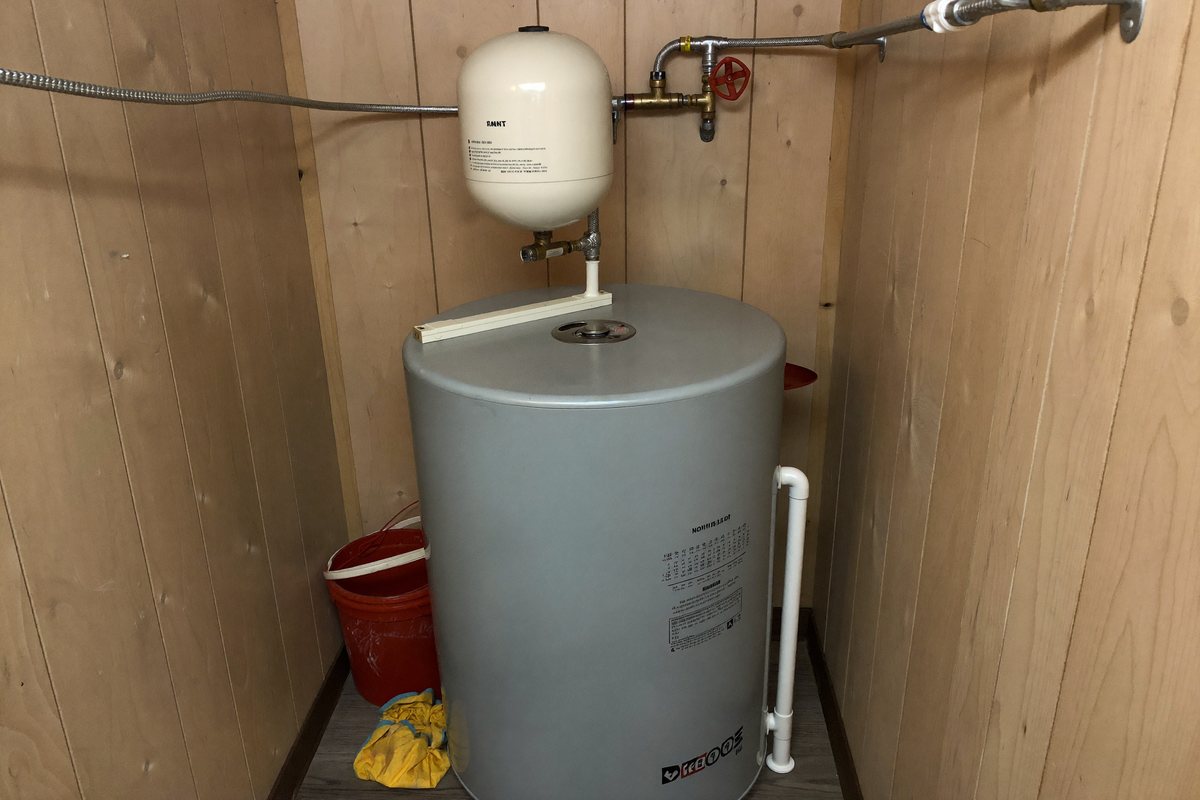
This is one of the quicker jobs we do — usually takes about an hour. Here's how it works:
We verify whether your home has a closed plumbing system and confirm that an expansion tank is needed. We also check the water pressure to make sure everything is in the right range. Sizing matters, because too small an expansion tank cannot absorb the expansion from a large water heater.
We match the expansion tank to the size of your water heater and install it on the cold water line above the heater. It mounts securely and takes up very little space. We set the air pressure in the tank to match the water pressure in the house.
We check for leaks, verify the pressure is balanced, and make sure everything is working as it should. Done — your water heater and plumbing are now protected. That reading gets checked again before we leave.
Expansion tanks don't last forever — most last about 5 to 10 years before they need to be swapped. Here's how to tell if yours has gone bad:
It's a small tank that absorbs the extra pressure created when your water heater heats water and it expands. Without one, that pressure pushes on your pipes, fittings, and water heater — which can cause leaks and damage over time. Without one, that pressure pushes back down the cold water pipe.
Yes, in many cases. North Carolina plumbing code requires one on homes with a closed plumbing system. Most Charlotte homes with a backflow preventer or pressure reducing valve fall into this category. A quick look at the meter tells us which setup you have.
Most expansion tank installations in Charlotte run between $150 and $350 depending on the setup. We give you the price upfront before starting. That covers the expansion tank, the fitting and the pressure check. No separate charge for the air pressure setting. A straightforward expansion tank installation is usually done inside an hour.
Most last about 5 to 10 years. They wear out as the internal bladder breaks down. We can check yours during a service call and let you know if it's time for a new one. A failed diaphragm lets water into the air side, and the tank goes heavy.
Common signs include the safety valve on your water heater dripping, fluctuating water pressure, or the tank itself feeling completely full of water when you tap on it. A working tank should feel partly hollow. Tapping the expansion tank tells you a lot, because a healthy one sounds hollow near the top. A waterlogged tank sounds and feels solid.
Yes. Without a working expansion tank, excess pressure builds up every time your water heater runs. Over time this puts stress on the tank, fittings, and pipes — which can lead to leaks or the water heater failing earlier than it should. Over time that thermal expansion shortens the life of the water heater and everything downstream.